Journal / The Unhurried Life
A Morning on the Walls of Lucca
Nov 24, 2026
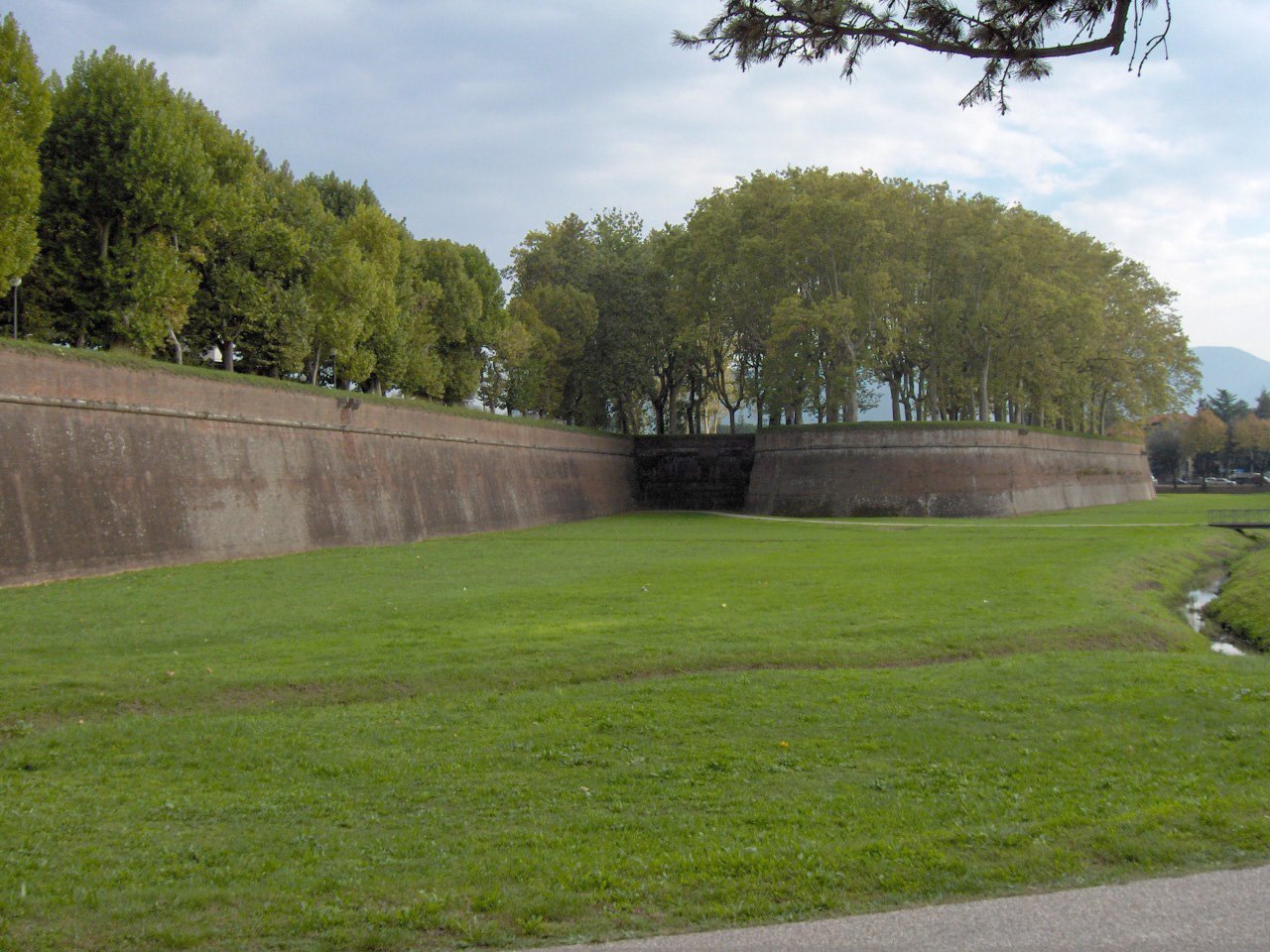
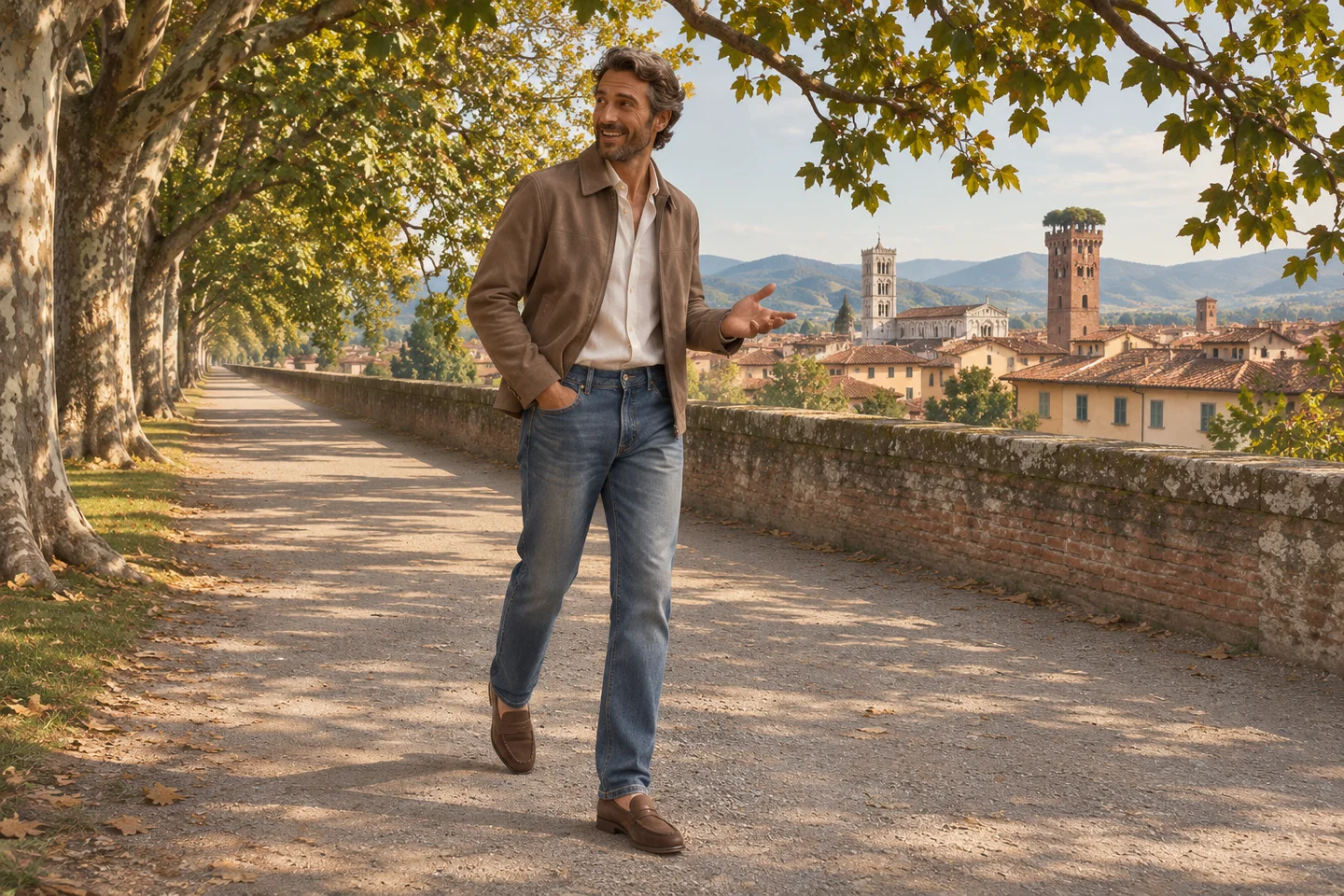
The tree-lined ramparts above the lawns outside Lucca. Photograph by Georges Jansoone (JoJan) · CC BY-SA 3.0. Resized for the Journal.
Lucca offers a pleasant way to choose a street for later. Go up on the walls, pick out something above the roofs and see whether you can find it again when you come down. A bell tower makes an obvious candidate. The stranger sight, if you can pick it out, is a tower with trees growing on top. That is the Torre Guinigi. Finding a tree in the sky gives the morning a purpose, even if neither of you feels the slightest obligation to reach it.
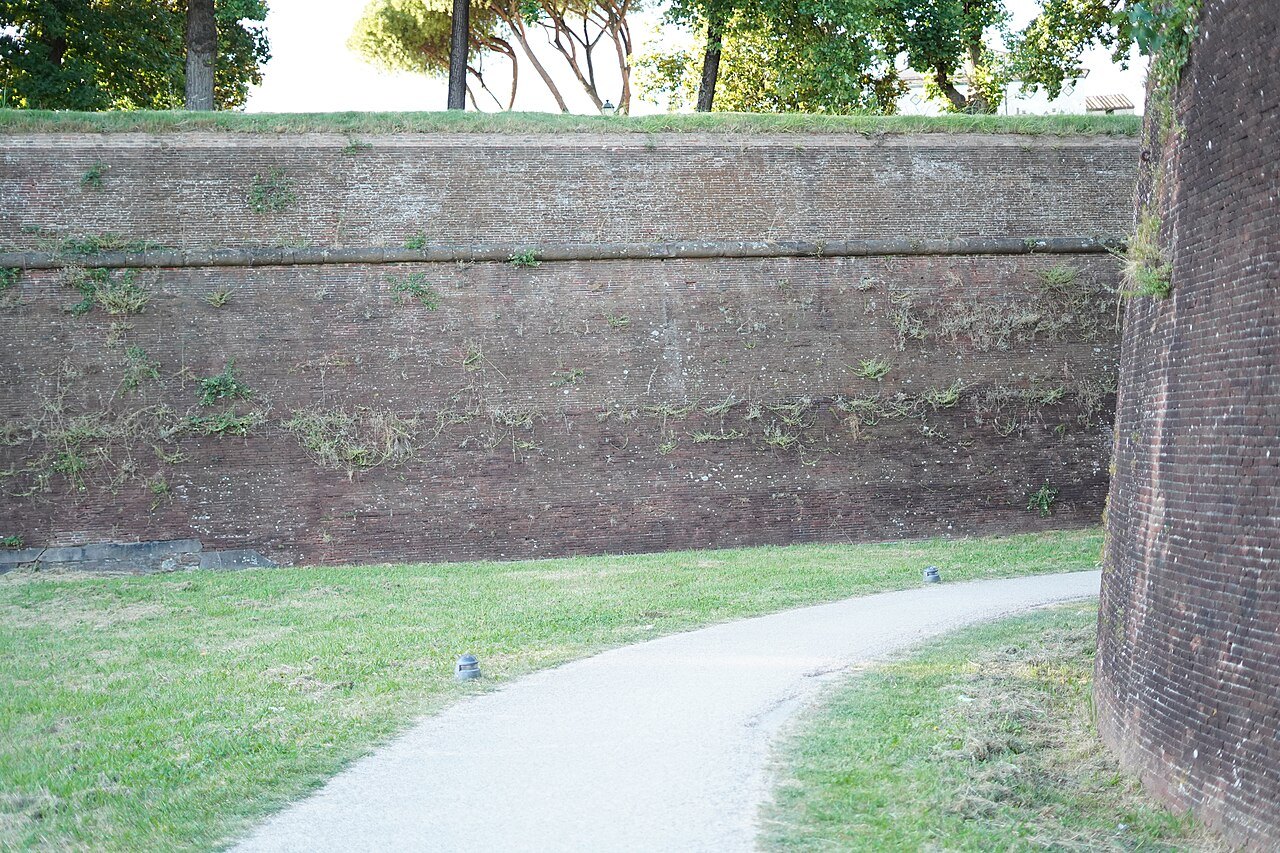
The walls began as Renaissance fortifications. The town describes their conversion to public use in the early nineteenth century, when the defensive circuit became a shaded promenade. What makes the change so tangible is the width. There is room up there to walk beside someone and still let a bicycle go past. Seen from the lawn outside, the same stretch reads as a formidable bank of earth and brick. It takes a short climb to turn one impression into the other.
A piece of the circuit
The municipal walking map brings a route up at the Baluardo San Colombano and down again by the Caffè delle Mura. Borrow that section for a first visit. The complete circuit runs for more than four kilometres. Taking a piece of it leaves time to see the wall from below as well as above. The photograph at San Colombano is worth looking at before setting out. The path makes a turn beside the brickwork, and the people walking on top would have quite a different picture of the place from someone standing down on the bend.
Once up, give each side of the path a little time. Look out over the open ground first. Then cross towards the town and allow your eyes to settle at the height of the roofs. A church tower that would fill your field of vision in a narrow street occupies only a small interval between two trees here. Move a few paces and it disappears. This is a good walk for two people who seldom stop to look at the same thing. Each can call the other back before the view changes.
The city's botanical map offers another way to spend that stretch. It identifies trees along the circuit, including planes and horse chestnuts. Choose one from the key and try to recognise the next before consulting the map again. In winter, a plane gives itself away by the pale patches of its peeling bark. You can do this quite happily with a child, a botanist or a companion who had intended to spend the whole morning talking about something else.
A second look from below
Come down while you still remember the view from the top. From the foot of the wall, it is easier to see how much earth the brick facing holds in place. The trees which seemed to form an avenue when you stood among them now make a row against the sky. Turn back for one look at the path you have just walked. A photograph made here will explain the morning to someone at home rather better than a succession of rooftops.
If the tower with the trees has stayed in your mind, the city lists it on Via Sant’Andrea. Give the map to the person who spotted it first. Approaching on foot restores the scale that the distant view took away. The upper branches vanish between buildings and come into sight again. You can leave the climb for another day. There is a small satisfaction in reaching the foot of something you first saw from across town.
On the return, put the map away for the stretch you recognise. Let the other person tell you when to turn. A few minutes spent looking for a familiar outline in an unfamiliar direction can make a short route feel surprisingly generous.
The other possible ending is to come down near the Caffè delle Mura and let someone else choose where to have coffee. At breakfast you might have expected the tower to be the point of the morning. By now the best part may have been the five minutes spent looking for a second plane tree. If your companion wants another five, there is still plenty of wall.
Lucca’s city walls · City walking map · Botanical map of the walls · Torre Guinigi