Journal / Art & Pursuits
Looking Twice at Monet’s Water Lilies
Nov 24, 2026
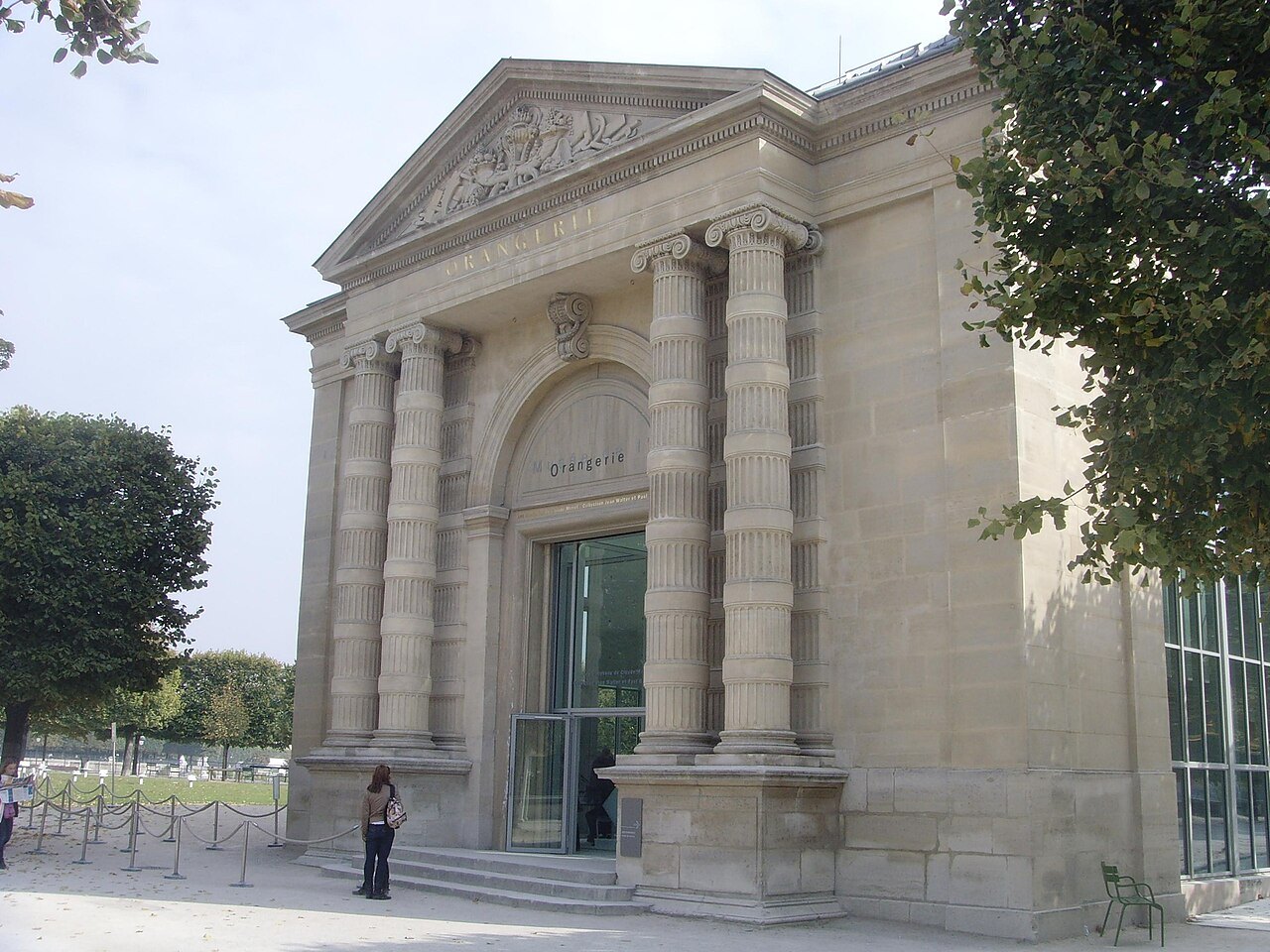
The columned entrance to the Musée de l’Orangerie in Paris. Photograph by Homonihilis · CC BY-SA 3.0. Resized for the Journal.
Choose a patch of water you think you could find twice. In the detail photographed at the Musée de l’Orangerie, you might pick the pale bloom at the left or a dark stroke that seems to slip underneath a leaf. Look away from the photograph for a moment and see which one you can still place. This is a small exercise to take into the museum in Paris. It gives you somewhere quite specific to start in rooms large enough to leave a first-time visitor wondering where to look.
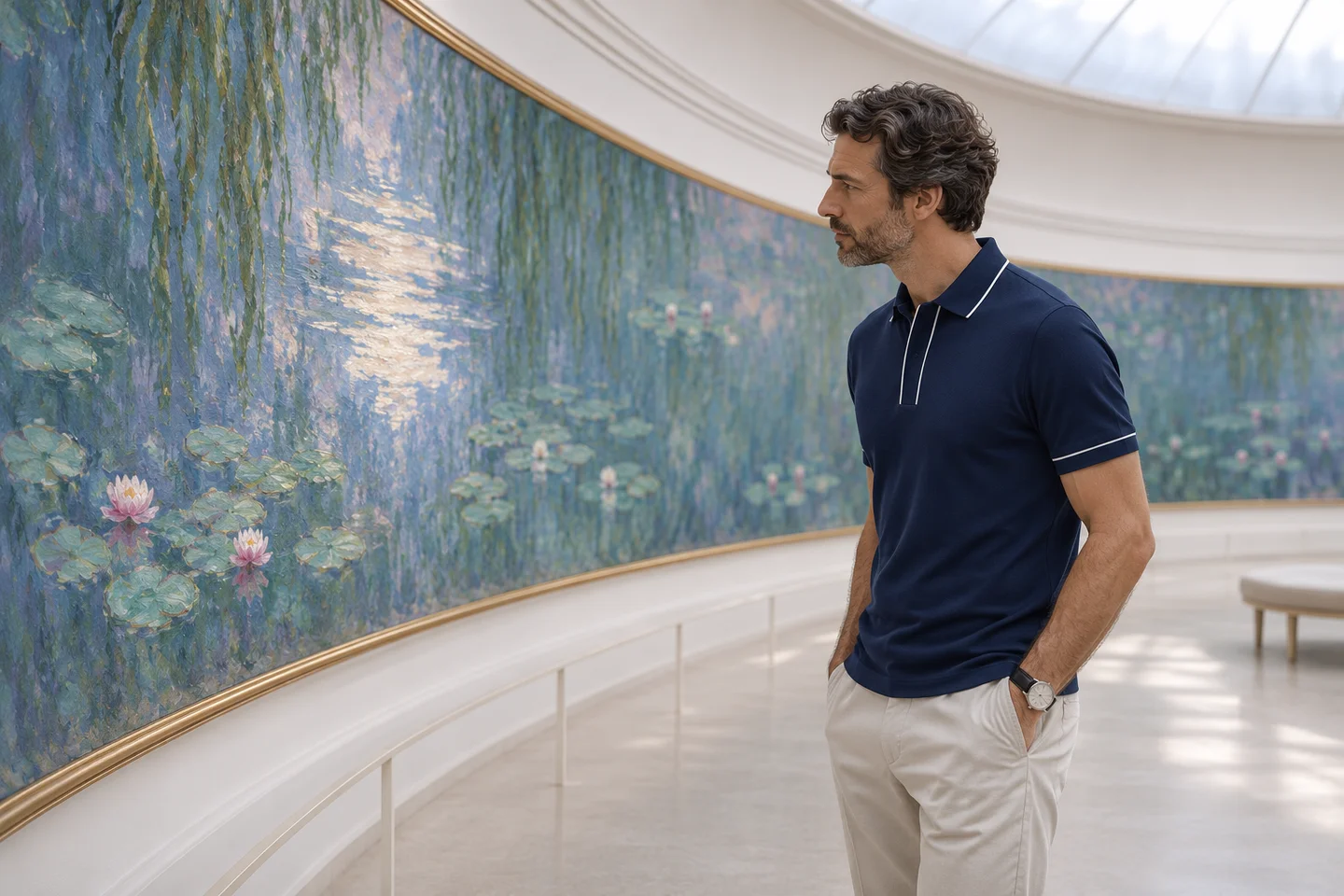
Claude Monet worked with the architect Camille Lefèvre on the setting for his Water Lilies. Eight compositions occupy two oval rooms. Daylight reaches them from above. Even a good reproduction on a page does something different to the eye. It gives the water a definite edge and puts the whole picture within reach of a single glance. In the rooms, the work continues beyond the point where you can look straight at it. Seeing the rest involves your shoulders, your feet and the person you have just asked to wait a moment.
Following the curve
The artist Agnès Thurnauer installed work of her own at the Orangerie. In her conversation with the museum, she describes the continuity Monet gave his paintings through the shape of the rooms. It is an especially useful observation from someone who has had to think about what it means to place her own work there. Take the thought with you as far as the first bend in the wall. Let your gaze follow the water sideways, and see at what point you begin walking to keep something in sight.
Start far enough back to take in a broad sweep of colour. Pick one place where a dark reflection crosses a lighter passage and approach as closely as the room permits. At one distance it is quite easy to believe in the depth of the pond. At another you may find yourself examining how a brush turned, or where a stroke runs dry. Stand there long enough to decide which bit of paint persuaded you that something was floating on top of something else. Then walk away while you can still remember the answer.
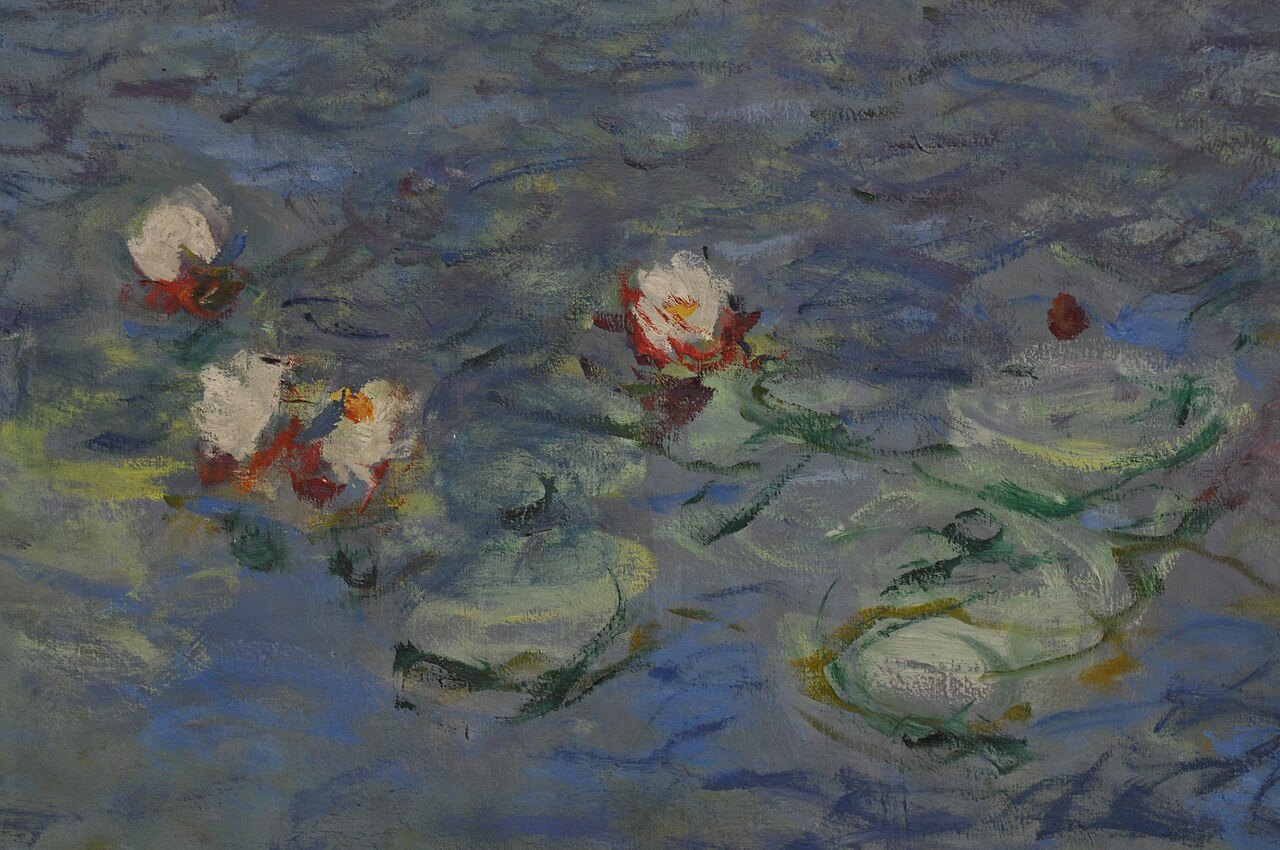
The photograph here can travel home with you. It records one view, under one set of conditions. In the museum the light above the painting belongs to the day of your visit. The museum describes how Monet took that variation into account. A cloud passing during a visit may alter what stands out in a patch of pale colour. On a steadier day the change on your second circuit may come entirely from having looked at another painting in between.
A second pair of eyes
If you have come with someone, agree to separate for a few minutes. Each choose a place to bring the other back to. Leave the description until you are standing together in front of it. The instruction can be as simple as asking your companion to follow one dark line until they lose it. Watch where their eye goes next. They may find a willow while you are still preoccupied with which way the water appears to move.
One reason to return to that first patch before leaving is to test your memory of its surroundings. A flower you remembered as pink might owe some of its colour to the blue immediately alongside it. A reflection you thought ran on for yards may come to quite an abrupt end. Both are things you can discover for yourself without having the right vocabulary for a critic or the steady hand of a painter.
Outside the room, try describing what you chose to each other in a single sentence. Keep the words as ordinary as you like. Later, looking again at the same photograph, that sentence might be what brings back the curve of the wall and the afternoon you spent beside it. There will be plenty of accounts of Monet to read on the way home. Only two people will have this particular account of the pond.
Agnès Thurnauer in conversation with the museum · The museum on Monet’s Water Lilies